Legio Invicta
A brand-new fantasy strategy game, built from the ground up on its own engine. Chart uncharted isles, raise cities, carve roads and trade-routes, and bend rival powers through diplomacy — or the sword.

This chronicle is unfinished. Legio Invicta is still being written — the images below are scenes from a work in progress, and much will yet change before the tale is told.
The Tale
I · The Sundering
There was a time, the old songs say, when the world was one land and one people, and a man might walk from the eastern shore to the western sea without ever taking to a ship. Fields ran unbroken into other fields; a road begun in one lord’s country ended, weeks later, in another’s, and no salt water lay between. That age is gone, and only the songs are still sure it was ever real.
They called the order that held it the Concord — a covenant of crowns, sworn over generations, that kept the roads open and the beacons lit and the peace, more or less, kept. It was no golden age; there were bad kings still, and hard winters, and wars that should never have been fought. But a message could cross the world and be answered, and a caravan could set out in spring and come home in autumn — and that is more than any lord has managed since.
How the Concord broke the chronicles do not agree, and the part they all tell is the part that cannot be true, so it is left out here. What is certain is the ending. In the space of a single year — some say a single night — the waters rose and the earth was riven. The histories give it no grander name than the Sundering. The one land became a hundred scattered isles, and the sea, which no living map had needed to draw, was suddenly everywhere.
The roads died first. The great paved ways ran now to the edge of a cliff, or into the tide, and simply stopped — and with them stopped the trade, and the tithes, and the marching of armies to anywhere that mattered. Bridges stood with no far bank. Milestones counted down to towns that were under the sea now, or a week’s hard sail away, which for most men came to the same thing.
Then the lights went out. The watch-fires that had answered one another across the valleys since before the Concord went dark one by one, as the men who tended them died, or wandered off, or forgot why it had ever mattered. Each isle drew in upon itself, kept its own small peace, married its own cousins, and remembered a little less of the wide world with every turning of the year — until the Concord was a word in a song, and the songs, too, were going quiet.

II · The Long Cold
Into that long silence the wild came back. It did not roar; it crept. Wolves came down from the high passes in packs larger than any grandsire could recall, and did not go up again when spring came. Boars grew bold in the ploughlands and took the outlying fields for their own. In the deep wood the spiders spun between the trees where no lamp burned, and the woodcutters stopped going in past a certain oak — and then stopped going in at all.
Men learned again the old habits of a frightened people: to bar the door at dusk, to travel in company or not at all, to leave an offering at the boundary stone and not ask what took it. A generation grew up for whom the edge of the known world was the edge of the last field, and past it only rumour and the dark shapes of hills no one had names for any more.
Then, out of the wastes the maps no longer covered, came the orcs — crossing under crude banners in warbands that swelled as they marched, burning what they could not carry and carrying off what they could. A strong isle could throw them back; a weak one became a story told on the next isle over. And behind the orcs, seldom seen and never mistaken, came the warriors of Chaos, who do not raid for gold or grain or slaves, but to unmake: to leave a field that will not grow and a well that will not clear, a thing worse than merely ruined.
The sea, which had been the road of the old world, became its terror. The isles kept no navies, for no one living had needed one; so the longships slid out of the morning haze as they pleased, and the raiders stood upon the beach before the horn had finished sounding. They took the harvest, and the young, and the tools to make more, and were gone on the ebb — and there was no fleet in all the isles to catch them on the water, where they were weak.
The kings that were left did as small kings do. They counted their own walls, mistrusted their neighbours more than the dark, and told one another that the burning coast was some other lord’s border to keep. Now and again two of them made a marriage or a truce and called it a great alliance, and it lasted until the harvest. The dark did not trouble to disagree. It only kept coming.
Yet the small folk endured, as they always do. A hermit kept a shrine on a road that led nowhere now, and knew things that travellers wanted knowing. A merchant still pushed his cart between three villages that trusted him, and remembered exactly who had robbed him and who had not. On such thin threads — a rumour, a debt, a kindness done on the road — what was left of the old world still, barely, hung together. It was waiting, though it had lost the word for what it waited for.

III · The Realms Adrift
The isles that outlived the Sundering did not outlive it the same way. Some kept a crown, and a court, and the forms of the old law, ruling a handful of towns and a stretch of coast and calling it a kingdom. Others pitched the crown into a ditch and were run instead by whoever held the granary — a captain, a guild, a particularly stubborn abbess — and did no worse for it, and sometimes better.
Where two good harbours faced each other across a narrow strait, a free city sometimes grew, living on the water-trade the raiders had not yet strangled, beholden to no crown and suspicious of them all. Their walls were high and their treasuries deep, and their loyalty could be had by the season, if the coin was good and the cause was winning. A commander who could not tell an ally from a customer did not stay a commander long.
Beyond the settled isles lay the holds of the enemy. In the ash-lands were the orc-warrens, loud and quarrelsome and endlessly breeding, throwing up a war-chief every few years who was strong enough to point the whole seething mass at someone. And further out, where the maps gave up and left honest white paper, lay the marches of Chaos, where the ground itself had gone wrong and even the orcs would not build.
And on the cold northern water were the sea-peoples, who had made the Sundering their inheritance: raiders in the lean years and traders in the fat ones, and never quite either for long enough to be trusted. A wise commander learned the difference between the fleet that comes to bargain and the fleet that comes to burn — and learned it, if he was fortunate, in time.

IV · The Unconquered Legion
You are the one who will not kneel to it. Perhaps you were the captain of a garrison with no king left to serve; perhaps only a hard soul in a hard time, with the wit to see that no one was coming to save anyone. It begins small either way — a single banner raised over a muddy field, and a handful of men who swear the old oath and, this time, mean it. From that you forge a thing the chronicles have had no cause to name since the Sundering: a host that is beaten and re-formed and beaten again, and is never, in the end, conquered. Legio Invicta — the Unconquered Legion.
You begin as the first captains of the Concord began: by reading the lie of the land. Where the passes run and where they choke; where the river may be forded and where it may be held; where a city wants to stand — on high ground, with water at its back and good country around it to feed the walls. You found those cities and raise them the slow, honest way, stone upon stone, with real time and real cost, and you never pretend a wall is built until it is.
Then you bind the isles again. You cut roads between your towns and set traders upon them, and the roads carry more than goods: they carry word, and warning, and the slow habit of trust that the Concord ran on and the dark had all but killed. Two towns joined by a good road are worth more than three that are not, and you learn to think in those terms — not in places, but in the lines drawn between them.
You fly your colours where the beacons used to burn, and you light the old towers again, so that a rider on the far hill knows whose country he is in, and a raider on the near water knows that he has been seen. Castles rise with banners on their walls; villages spread beneath them; and at night, for the first time in long memory, there are lights on the high places that are not the fires of something burning.
You take back the water. You buy longships of your own and crew them, and the sea stops being only the road the enemy uses. Catch a raiding fleet out in the open and the fight is fought by the ships, hull against hull, for no shield-wall stands on water; and a coast that can be answered at sea is a coast the raiders soon learn to leave alone.
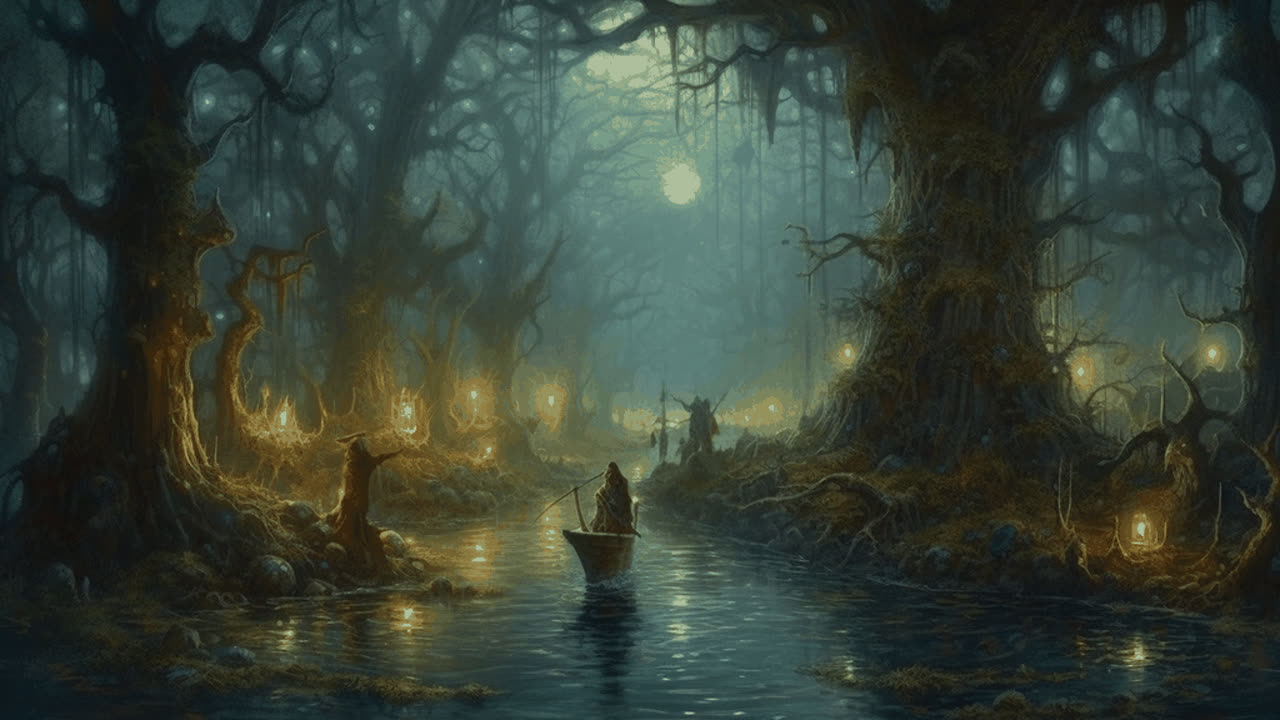
Not every rival is met with steel. Some you weigh through the envoy your legion sends to talk, standing in for you at a table you will never sit at; some across a merchant’s cart on a forgotten road, where a fair price buys more than a battle would. You listen to the hermit’s rumour and take up the quest it points to, step by careful step, and the country slowly learns your name and decides, one dealing at a time, what that name is worth.
And when words run dry, there is the field. It is not clean. Arrows fly and men fall who were alive a breath before; a shield-wall holds, and then all at once does not; and morale — the plain question of whether a man will stand or run — decides more battles than numbers ever do. Up on the map a warband is a banner and nothing more, as it should be; but when the banners finally meet, every figure beneath them is a man of flesh and bone, and fights, and falls, as one.
The worst days are the sieges, when a wall whose cost you know comes down section by section under engines that must be built and dragged and crewed — and the thing on the far side of the gate may be no man at all. Beasts and orcs and the striding warriors of Chaos test every mile you have won; and each, in the end, is met the same way: held, and answered, and outlasted.

V · The Winter of the Oath
The first winter nearly ended it. The banner had been raised in autumn, when it is easy to be brave, and by midwinter the Legion was a hundred cold men in a half-built fort on a field that the maps, if there had been maps, would have called nothing at all. The grain ran short. Twice the wolves came into the ditch itself in the dark. A man could have walked away and no one would have blamed him — and a few did, and were not cursed for it.
You did not, and enough stayed that there was still a Legion when the thaw came. They rebuilt the palisade in the mud, buried the ones the winter had taken, and gave the nameless field a name — the first place in a hundred years to be named by someone who meant to hold it. It is a proper city now, with walls of stone and a market and a garrison; and the old hands still call the oldest quarter the Muddy Field, and mean it kindly.
That is how it goes, ever after: not one great victory, but a hundred winters survived, a hundred fields named, a hundred men who stayed when they might have gone. The songs will tidy it into something cleaner than it was. It was never clean. It was only, in the end, unconquered.
VI · The Old Faith and the Older Ruins
The Concord left more than roads. Its people had kept shrines at the crossroads and the fords and the boundary stones, and though the priests are long scattered, the shrines endure — tended now by hermits who chose the quiet, or were left behind by it. They ask little and know much, and a captain who stops to listen learns where the old wells are, and which pass floods in spring, and what it is that walks the wood after dark.
And under the new grass lie the bones of the old world: drowned towns at low tide, milestones that count down to nowhere, and here and there a deeper ruin that predates even the Concord, whose makers the hermits will not name. In such places are found the artifacts — a blade that will not dull, a standard that steadies the men who march behind it, small strong things out of a stronger age. They are not gifts. Each is a question, and the country watches to see how you answer it.
Whether the old powers still listen, no two hermits agree. But men fight better for a cause they can name, and a legion that keeps the shrines and honours its dead is a legion that holds together on the bad days — and the bad days are most of them.
VII · Know Your Enemy
The orcs are not the worst of it, though they are the most of it. They breed faster than any lord can cull, and every few years the warrens throw up a chief strong enough to weld the squabbling mass into a single host and point it at whatever lies nearest. Beat that host and the orcs fall to fighting one another again — which buys you a season; and a season, spent well, is time enough to raise a wall.
The sea-peoples can be reasoned with, if you take them in a trading year and speak as an equal; they respect a strong coast and despise a soft one, and a fleet of your own changes every conversation. Pay them once as raiders and they return for more; beat them once at sea and they go looking for a friendlier shore. The trick, always, is knowing which fleet is which before its keel touches your sand.
Chaos cannot be reasoned with, for there is no one there to reason with. It does not want your gold, your land, or your surrender; it wants the field to stop being a field. Where it has passed, the crops come up wrong and the water will not clear, and the men who saw it do not speak of it plainly. It can be held, and driven back, and made to cost more than it gains — but it is never truly beaten, only kept from the door one more year.
So you learn each enemy the way a farmer learns weather: not to defeat it once and for all, which is a child’s idea, but to read it, and be ready, and lose a little less to it each year than it costs you to stand ready. That, when all the songs are sung, is what the Legion is for.

VIII · The Field of the Long Grass
There is always a first great battle — the one the songs actually keep. For years it had been skirmishes and sieges, a farm held here and a raid turned there; and then, in the fifth autumn, an orc war-chief did what war-chiefs seldom manage: he held the warrens together long enough to march them all at once, and came for the young cities in a single host, before the harvest was in.
You could not hold every wall, so you chose the ground instead. You gave up two villages to buy the time, and set the Legion across a wide field of long grass between two woods, where a host could not swing wide to flank and numbers would count for less than nerve. The line held through the first charge, and the second; the archers emptied their quivers into the press; and when the orc centre finally buckled it went all at once, the way a shield-wall does, and the field was yours by dusk.
It did not end the war — wars do not end that cleanly — but it ended the doubt. After the Field of the Long Grass the free cities began to answer your envoys’ letters, and men walked a week to take the oath, and the war-chiefs learned to reckon with a name they had not troubled to learn before. A legion that can beat a great host in the open is a different thing from one that can only hold a wall.
IX · The Fleet and the Far Isles
For a hundred years the sea had belonged to the enemy, because no one else would pay for a ship. You paid. The first hulls were bought, not built — bargained from a sea-people captain in a trading year, an old raider named for a bird, who decided (for reasons he never fully gave) that he would sooner be paid to guard a coast than to burn it. He taught your first crews, and half of what the Legion knows of the water it knows from him.
With hulls under you, the map grew. Beyond the home cluster lay isles no one had touched since the Sundering — some drowned to the rooftops, some empty, and some holding a few hundred souls who had believed, in earnest, that they were the last people left alive. To sail into such a harbour under a flying banner, and be the proof that the world had not ended after all, is worth more than any tribute a richer isle could pay.
So the sea became a road again, and a road runs both ways. It carried your grain to the hungry isles and their ore back to your forges; it carried warning faster than any rider; and it carried the Legion itself, so that a fire lit on a far beach at dawn could be answered before nightfall. The Sundering had made the water a wall. You made it a bridge.
X · This Age
How the tale ends is not written, for it has not yet happened; that part is yours. But this much the old songs would know again: a hundred isles, the roads knit between them, colours on the towers once more, and a plot of ground worth the dying for. Whatever else is lost, the Legion is not conquered.
Long after — if the songs are kind and the walls hold — they will say there was a time when the world was breaking, and one banner would not fall, and around it the roads were knit again, the towers relit, the isles drawn back one hard winter at a time into something a person could call a country. They will make it sound as though it could not have gone otherwise. It could have. This is your age now — an age of banners and blades.
What Has Been Forged
Milestones already built into the game — a chronicle of the work so far.
A Living 3D World
Islands of sea, cliffs and mountains; terrain of forests, swamps with 3D marsh plants and farm fields; rivers, bridges and roads under optional dynamic sun-shadows. The maps are four times the ground now, the island’s coast rounds into headlands and bays, and you choose how many towns fill it. The wilds are filling out with imported 3D detail — Scots pines and birches, fallen mossy trunks and dead snags, rail fences that run and break where nobody mends them — roads and rivers fade softly into the ground, and a town raised in timber now flanks its palisade with wooden watchtowers.
Men, Not Markers
Where a man is a man — in a battle, down a walked street, on a wall or a deck — he is now a rigged 3D model, not a flat picture. One skeleton carries the men through sixteen hand-built clips: walk, run, attack, defend, shoot, hack, dig, forage, row, climb, rest and fall. And it is not only men — wolves, boars, spiders, orcs and the warriors of Chaos each ride their own skeleton, drawn from the mesh rather than a sprite sheet. Up on the map, where a warband is a banner and no man, they stay banners — the way it should be.
Arms, Modelled
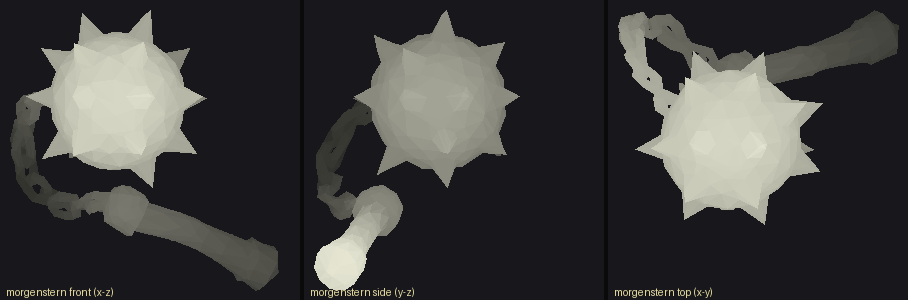
The weapons are 3D models in the hand, not painted on: single- and twin-bladed axes, swords, a flail (the spiked morning-star that goes round a shield), and polearms — halberd, glaive, war-scythe and trident — each a real mesh, so a field of axemen is no longer a field of identical axes. And they fight differently: a shaft is an arm made longer, with its own reach and a straight thrust clip, while a flail ignores the cover a formation gives — and every figure is checked, pose by pose, so no blade ever tears through its own bearer.
Cities to Raise
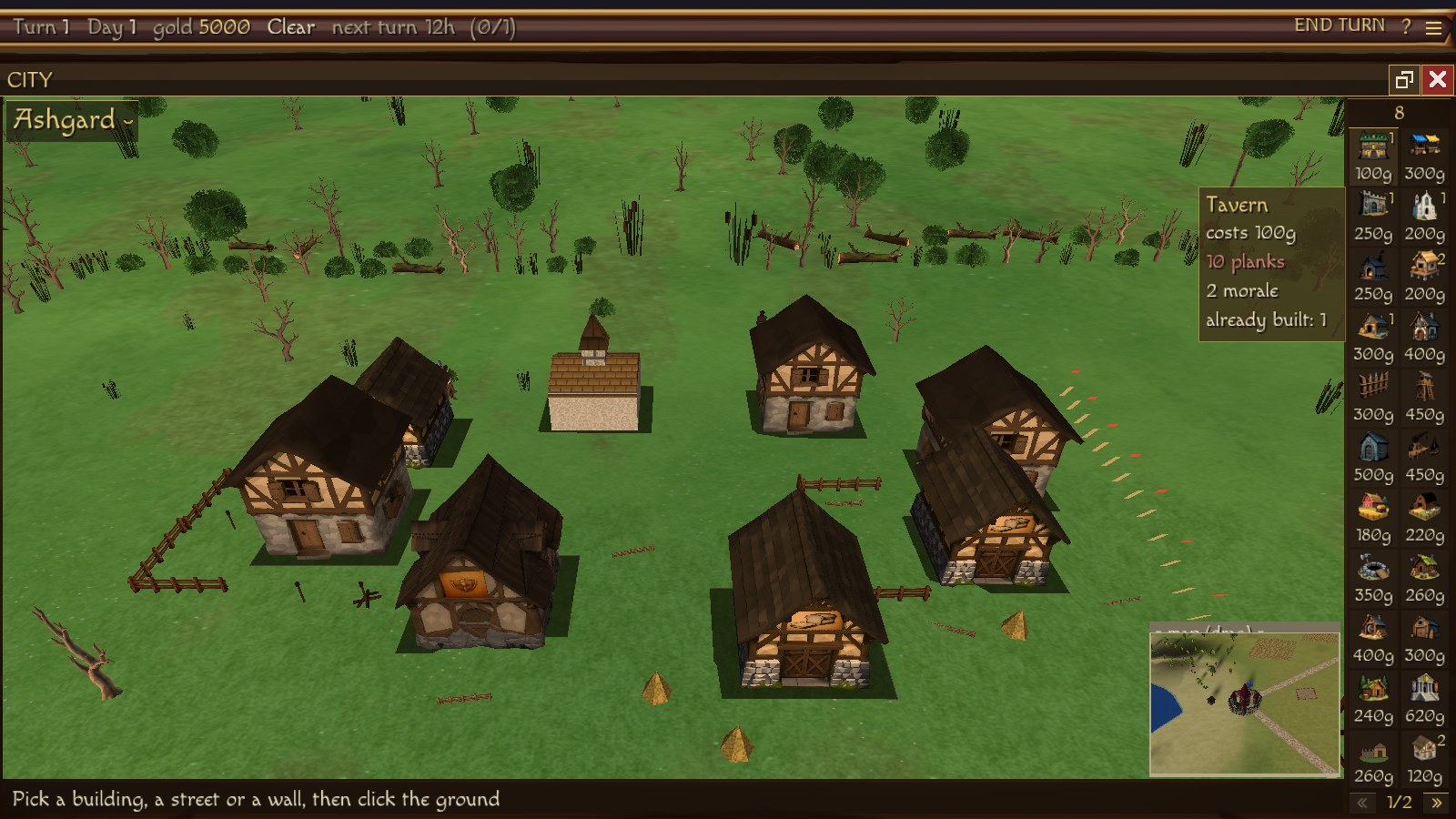
Found cities and build them plot by plot with real build-times, fly your colours above them, and light the land with villages, castles and night torches. The mayor’s wall grows with the town, a market is four coloured stalls, and the townsfolk walk from door to door instead of vanishing. The town works now, too: the farmer walks out to sow and cut his field, the woodcutter comes home under a log, the forester plants saplings, the stonemason breaks his boulder, and a new Hunter’s lodge brings in food without a field. A wall ordered before its stone has come is pegged out on the ground and laid as the means arrive, and walls, towers and the gate each have a painted tile in the catalogue.
Hosts & Cunning
A* pathfinding that skirts the water, per-faction AI army templates, and rivals who develop their own cities for wealth and defence. In a battle the AI commanders read the field — bows, horse, spears, engines, sheer strength — and choose a plan and their targets by matchup, as well as the difficulty allows. The rival lords now play the whole game: they build rounded towns, wall them, send out geologists and sink mines, and keep their men together until there are enough to take a town — a novice sends levies piecemeal, a master counts the legions standing by a town. And every fight is fought: lord against lord or lord against town, each is a real battle, even where nobody is watching.
Battles
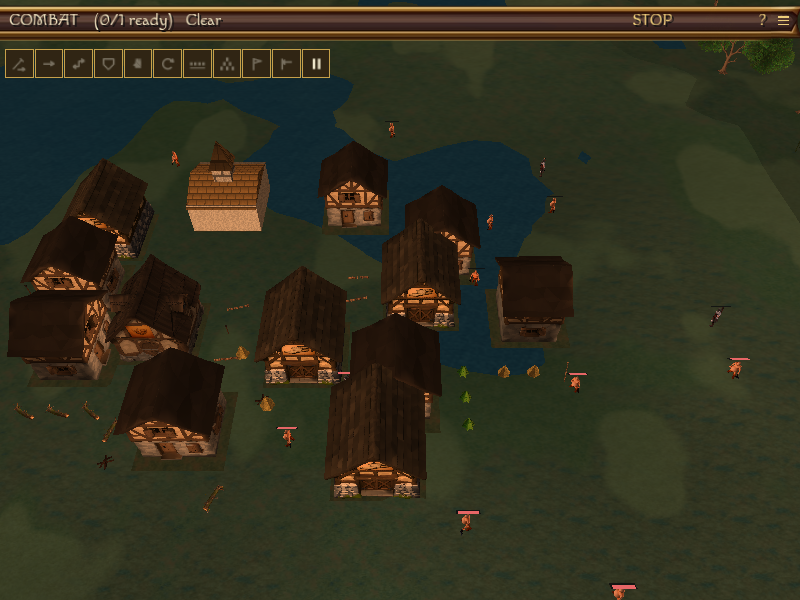
Pausable real-time battles with full manual command — arrows in flight, morale routs, unit encumbrance, and monstrous foes with their own cries. Before each battle of yours a requester asks who fights it — you or your officer; battles run about ten times slower now, drawn smoothly in between, and a side you command waits for your orders. Every group of yours shows its order — a faint ribbon to where it is bound and the order’s mark above it; the right button says where to go and, dragged, which way to face; groups are kept on the number keys, and every key can be changed.
The Fog of War
On the action grounds you see only what you can see. A world-space mask the renderer reads per drawn thing — dark where no one of yours has been, dim where it is only remembered, whole where a man of yours is looking now, with soft edges between — and a town sees by what it has built. Enemies out beyond your sight are simply not drawn.
Quests & Artifacts
Multi-step, moddable quest chains with branching dialogue and saved per-player progress, plus data-driven, moddable items and artifacts.
Sieges & Engines
Walls that come down section by section, a gate that is the weak point, and siege engines that are now 3D models with visible crews — a catapult and ballista bought and carted, a trebuchet raised under the walls over days, and a ram on wheels that three men must push into the gate; kill the crew and it stops dead. Each differs in how it ARRIVES, and in what it is good for. The ballista is now a full 3D model like the rest, with its own animations — it rolls into position on turning wheels, rears and recoils as it looses a bolt, and comes apart when it is destroyed.
A Coast to Answer For
Vikings and pirates who take what they came for and sail — seen crossing the water days before they land, so there is time to get a legion onto that beach. Buy longships of your own and the sea becomes a road: catch a fleet out there and the fight is fought by the ships, because no shield wall stands on water. And the ships are real now — the trireme is a rowed 3D hull on its own skeleton, its oars the reason it moves; whether it rams, stands off or comes alongside to board, it plays a different part. And a hull now carries the legion’s own men, drawn on her deck: archers aboard shoot from the rail at their own range, blades make a boarding bite, each hull keeps her own damage into a fight and out of it, and a harbour mends her for gold.
Down on the Ground
Step off the map into the country itself: meet a merchant on the road and haggle through the man your legion sends to talk, hear a hermit’s rumour, hunt, or set upon somebody and find out what the trade remembers about you.
Allies & Oaths
Alliances are no longer the lords’ business alone. Offer one to a lord, accept, withdraw or break it — or ally with the other player across a network. Allies’ legions do not fight and do not march on each other’s towns, and allies win together. A warlord allies with nobody; the others will, if there is somebody to be allied against and you are worth having. There are two ways out of an alliance: openly, and nobody thinks the worse of you — or by treachery, falling on an ally who still takes you for a friend, which is remembered, and hardly any lord will ally with one who has broken faith.
Beneath the Hills
Send a geologist into the hills and he leaves a flag on every spot he tries, saying what lies under it — stone, coal, iron, gold, or nothing. Sink a mine on a flag that found something and it pays every day until the seam is spent; raise a watchtower out in the country and a legion coming at your town is seen a day out. Leave them unguarded, and a hostile legion takes them.
A Campaign, and a Free Game
Play in turns or in real time. The campaign is a chain of chapters, each with its own map, its own rival lords and its own goal — take every town, or hold out to a given day — opened by a painted briefing in your language. In a free game you choose how it ends: take everything, hold most of the towns, or fight for the capitals, where losing the town you began in puts you out.
Paint & Voice
The paintings are in: every chapter’s briefing, victory and defeat, the rooms of eleven buildings as you walk in, and twenty-one things that happen in the world each have their own. And the game has a voice — a hundred and three sounds, most in several takes, sixty of them already heard in play: birds by day and crickets by night, rain and wind, a town’s square, a bell at the end of a turn, a horn when your battle begins, and engines and ships that used to be silent.
Coin & Wages
Gold is worth something now. Tax has a price — push it past a quarter and a town loses heart and grows more slowly; legions are paid, and unpaid men go home. The half-day’s balance stands on the top bar beside your gold, and a legion’s wages are shown in its window.
Its Own Engine
A custom engine written from scratch, with 3D models and real-time movement freed from the economy clock. The whole interface now speaks in the game itself, live-switchable across six tongues — English, Polish, German, French, Spanish and Italian — and its deterministic-lockstep multiplayer is now tested peer against peer, proving every machine holds the same world. A third renderer has joined the two: Vulkan 1.3, drawing the same picture with the same shaders, and chosen in Options beside OpenGL.
Scenes in Progress
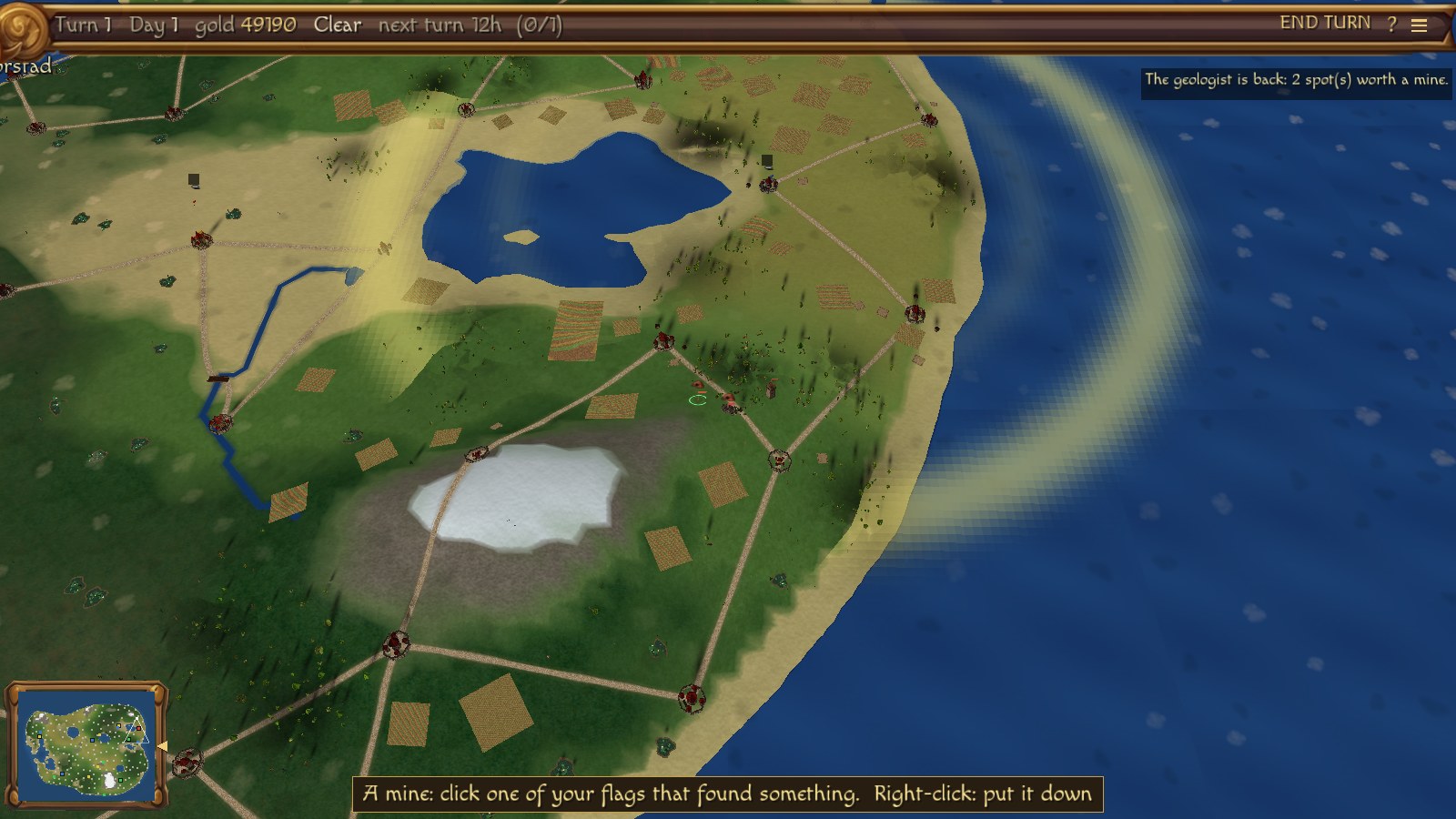
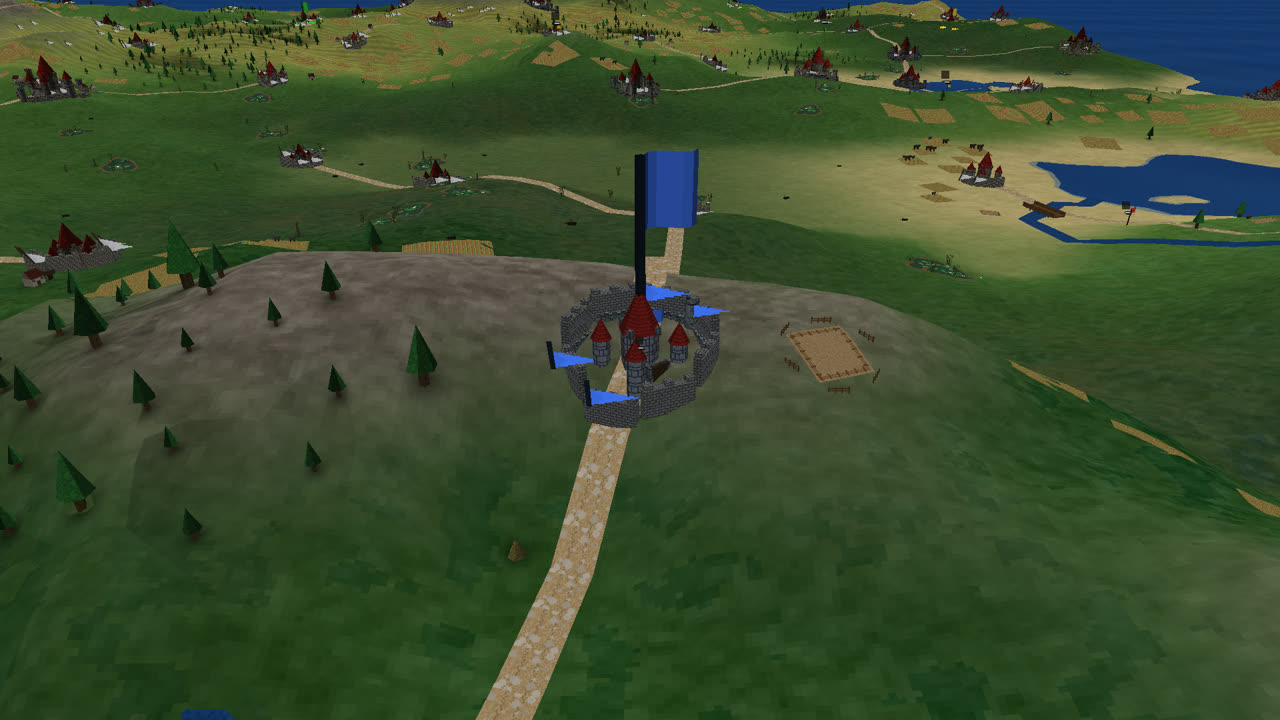


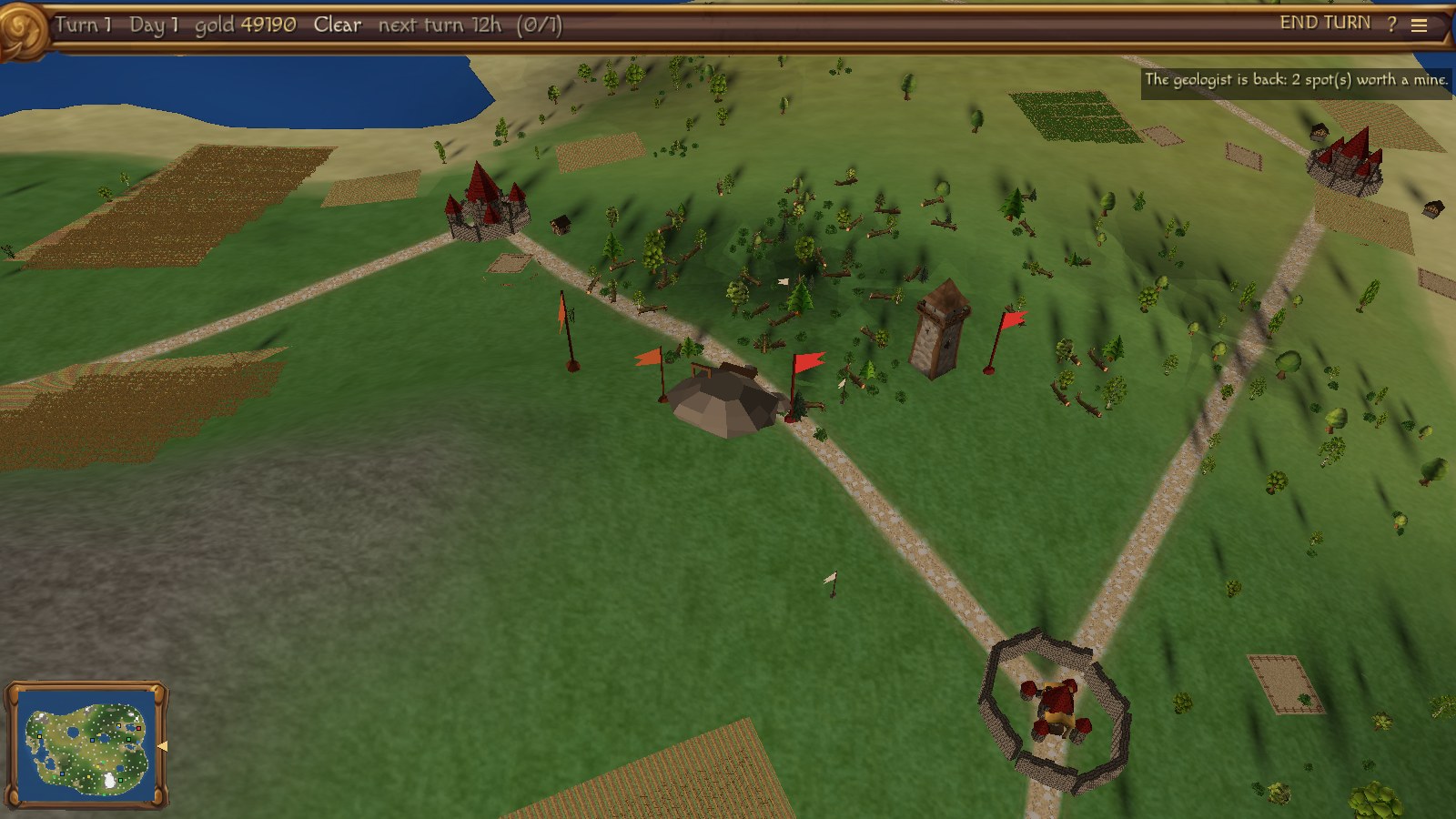





Status
Still in the forge — not yet ready to march. Legio Invicta is in development and cannot be downloaded yet. Return anon for word of its first playable release.
System Requirements
One codebase, from a PowerPC MorphOS box to the browser. Where Legio Invicta can be run is a design goal, not an afterthought.
Built with — C++17 on SDL2 with OpenGL, a single source tree across every platform.
Platforms — MorphOS on PowerPC is first-class, drawn through TinyGL (the fixed-function OpenGL 1.x subset); Windows, Linux and macOS run on SDL2, with a GLES2 / WebGL shader path for modern hardware and the browser. On the desktop the renderer is picked in Options — OpenGL 1, OpenGL or Vulkan 1.3 — and a machine without Vulkan 1.3 simply runs OpenGL instead.
Sound & music — carried by SDL2_mixer, with the music in Ogg Vorbis.
Availability — in development. There is no public build to download yet.